
At Revive With Me, we know medical weight loss is not just about taking a medication and waiting for the scale to move. The body is complex, adaptive, and deeply influenced by hormones, metabolism, muscle mass, nutrition, stress, sleep, and lifestyle. Retatrutide has created a lot of conversation because of its potential effects on weight loss and metabolism, but some patients are surprised when they feel hungrier instead of less hungry. If that sounds familiar, you are not alone, and there may be a science-backed explanation.
A Question We’re Hearing More Often
As more people learn about advanced metabolic therapies, we are hearing more nuanced questions from patients who want to understand what is happening inside their bodies. One of the most common concerns is increased hunger, especially when someone expected appetite suppression. This question matters because hunger is not a character flaw or a lack of discipline. It is often a biological signal that deserves a deeper look.
A common question we hear from patients exploring advanced metabolic therapies is:
“I thought retatrutide was supposed to reduce appetite, but I feel hungrier. I’m not gaining weight, but I’m also not losing much. Is that normal?”
The answer is: it can happen. And it may make more sense than you think.
Retatrutide is often discussed alongside medications like semaglutide and tirzepatide, but it is not exactly the same. Retatrutide is an investigational triple-hormone receptor agonist designed to activate GLP-1, GIP, and glucagon receptors. That third pathway, glucagon, is one reason it has generated so much attention in obesity and metabolic-health research. In Eli Lilly’s Phase 2 obesity trial, the highest retatrutide dose was associated with an average weight reduction of 24.2% at 48 weeks, and Lilly later reported Phase 3 TRIUMPH-4 topline data showing up to 28.7% average weight loss at 68 weeks in adults with obesity or overweight and knee osteoarthritis. [1]
But here is the important part: weight loss does not always happen because hunger disappears. In some people, the body responds to rapid weight loss by turning hunger signals back up.
First, What Makes Retatrutide Different?
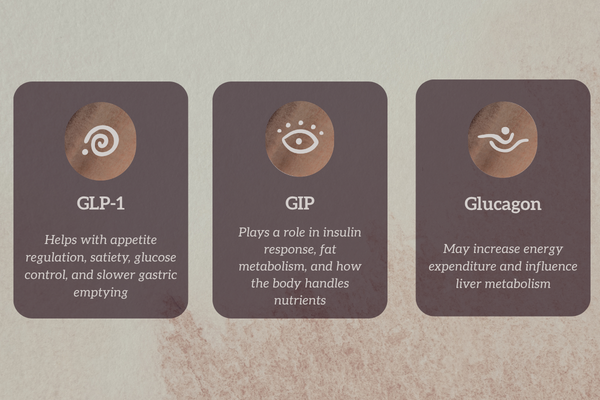
Most people are familiar with GLP-1 medications because they help regulate appetite, blood sugar, gastric emptying, and satiety. Retatrutide goes a step further by targeting three receptor systems:
- GLP-1: Helps with appetite regulation, satiety, glucose control, and slower gastric emptying
- GIP: Plays a role in insulin response, fat metabolism, and how the body handles nutrients
- Glucagon: May increase energy expenditure and influence liver metabolism
The glucagon piece is what makes retatrutide especially interesting. It may increase calorie burn, but the body often notices when energy output rises. When that happens, appetite can increase as a compensation mechanism. That is why some patients may feel confused:
“My metabolism seems more active, but I’m also hungrier.”
Both can be true.
Does Retatrutide Always Suppress Appetite?
Not necessarily. The common expectation is that retatrutide will feel like a stronger version of a GLP-1 medication, but the published appetite data is more nuanced.
A 2025 analysis of adults with type 2 diabetes treated with retatrutide found that researchers were specifically studying appetite, eating attitudes, dietary restraint, and disinhibition because weight loss and appetite changes are not always perfectly aligned. [2]
In other words, retatrutide may drive weight loss through multiple metabolic pathways, not just through making people feel less hungry. This is a key Revive takeaway:
Appetite suppression is only one part of metabolic weight loss. Hormones, lean mass, protein intake, sleep, stress, insulin sensitivity, and energy expenditure all matter.
Why You Might Feel Hungrier on Retatrutide
Feeling hungrier while using a metabolic weight-loss therapy can feel frustrating and confusing. However, increased hunger does not automatically mean the therapy is failing. In many cases, hunger is the body’s way of responding to changes in energy balance, fat loss, lean mass, hormones, or calorie intake. Looking at these signals through a clinical lens can help identify what needs to be adjusted.
1. Your Body May Be Defending Its Set Point
When body weight drops, the body often responds as if it needs to protect itself. This is called metabolic adaptation or a counter-regulatory response.
After weight loss, hunger hormones can rise, and fullness signals can weaken. Research has shown that appetite-related hormonal changes can persist long after initial weight loss, which helps explain why maintaining weight loss can be difficult without a long-term strategy. [1]
Two hormones matter here:
- Ghrelin: often called the “hunger hormone.”
- Leptin: a hormone that helps signal energy availability and fullness.
When weight loss is rapid, ghrelin may increase while leptin may decrease. The result can feel like stronger hunger, more food noise, or a sudden urge to eat more than expected.
2. Increased Energy Expenditure Can Increase Hunger
Retatrutide’s glucagon-like activity is one reason researchers are interested in its potential effects on energy expenditure. But when the body burns more energy, it may also work harder to replace it.
Think of it like this:
- Your body burns more calories
- Your brain senses the energy gap
- Hunger increases
- You eat more without realizing it
- The scale stalls, even though the medication is still active
This does not mean the therapy is “not working.” It may mean the rest of the plan needs to be adjusted.
3. Muscle Loss Can Make Hunger and Plateaus Worse
During any significant weight-loss phase, some lean mass loss can occur. This is not unique to GLP-1 or GLP-1–related therapies. It can happen with calorie restriction, rapid weight loss, and inadequate protein intake.
That is why Revive focuses on body composition, not just the number on the scale.
If someone is losing weight but not protecting muscle, they may experience:
- Lower resting metabolic rate
- Reduced strength
- More fatigue
- Stronger hunger signals
- A higher risk of regain
Current nutrition guidance for GLP-1 therapy emphasizes adequate protein, resistance training, managing GI side effects, preventing nutrient gaps, and preserving muscle and bone mass.
Why the Scale Might Not Be Moving
A stalled scale can be discouraging, but it does not always tell the full story. Sometimes the body is adjusting to a new metabolic state, fluid balance is shifting, or food intake has increased just enough to match higher energy output. Instead of viewing a plateau as failure, we view it as feedback that helps us refine the plan.
If you feel hungrier on retatrutide but are not gaining weight, it may suggest your intake has increased enough to match your energy output. In other words, the medication may still be affecting metabolism, but the body may be compensating by driving appetite upward.
Other factors can also contribute to a plateau, including low protein intake, inconsistent strength training, poor sleep, elevated stress, alcohol intake, hormone changes, thyroid issues, insulin resistance, or loss of lean muscle. This is why Revive looks beyond the scale and evaluates the full metabolic picture.
Who May Be More Likely to Feel Hungry or Plateau?
Not every patient responds to metabolic therapy the same way. Factors like starting weight, body composition, hormone status, sleep quality, stress, nutrition, and activity level can all influence hunger and weight-loss response. Understanding these patterns helps create a more personalized strategy instead of relying on a one-size-fits-all approach.
Increased hunger or plateaus may be more noticeable in people who have already lost a significant amount of weight, started at a lower body weight, are not eating enough protein, or are not strength training consistently. These patients may have less energy reserve, making the body more likely to defend against further weight loss.
Hormones and lifestyle factors matter too. Poor sleep, high stress, thyroid changes, insulin resistance, and sex hormone imbalances can all make appetite harder to regulate. When a patient feels stuck despite following the plan, these are the deeper factors worth evaluating.
What Revive Would Focus on First
Retatrutide is still investigational and should only be discussed in the context of qualified medical guidance and legitimate clinical pathways. But the principles below apply broadly to patients on metabolic weight-loss therapies, including GLP-1 and GIP/GLP-1 medications.
1. Prioritize Protein
Protein is one of the most powerful tools for improving satiety and preserving lean mass during weight loss.
A strong starting point for many patients is to build each meal around high-quality protein, such as:
- Eggs or egg whites
- Greek yogurt or cottage cheese
- Chicken, turkey, lean beef, or fish
- Tofu or edamame
- Protein smoothies
- Collagen plus complete protein sources
- High-protein meal prep options
High-protein diets may help improve satiety and preserve fat-free mass during weight loss.

2. Lift Weights Consistently
Resistance training is not optional if the goal is healthy, sustainable fat loss.
Aim for a consistent strength-training routine that includes:
- Lower-body exercises
- Upper-body pushing and pulling
- Core work
- Progressive overload
- Recovery days
- A plan that matches your current fitness level
You do not need to train like an athlete. You do need to send your body the signal that the muscle is worth keeping.
3. Track Body Composition, Not Just Scale Weight
The scale does not tell the full story.
At Revive, we recommend looking at:
- Body fat percentage
- Lean mass
- Waist circumference
- Strength
- Energy
- Hunger patterns
- Lab markers
- Clothing fit
- Progress photos
A patient may be improving metabolically even if the scale is temporarily quiet.
4. Review Dose and Timing With a Provider
More medication is not always better.
If hunger is increasing, side effects are rising, or the scale has stalled, the answer may not be to push harder. It may be to review the full plan with a provider.
A clinician may evaluate:
- Current dose
- Titration speed
- Side effects
- Nutrition intake
- Hydration
- Strength training
- Lab markers
- Medication interactions
- Whether the current approach still matches the patient’s goal
Never adjust medication dosing without medical guidance.
5. Check Sleep, Stress, and Hormones
Hunger is not just about willpower.
Sleep deprivation, chronic stress, cortisol imbalance, thyroid dysfunction, perimenopause, menopause, low testosterone, insulin resistance, and poor recovery can all make appetite harder to regulate.
For some patients, the missing piece is not a stronger medication. It is a more complete metabolic evaluation.
At Revive, that may include looking at:
- Thyroid markers
- Fasting insulin and glucose
- A1C
- Lipids
- Inflammatory markers
- Sex hormones
- Nutrient status
- Cortisol patterns, when appropriate
- Lifestyle and recovery habits
The Revive Perspective: Medication Is a Tool, Not the Whole Plan
Retatrutide is being studied because it may affect weight through more than appetite suppression alone. That is exciting, but it also means patients need to understand the full picture.
If you are hungry and not losing weight, it does not automatically mean you are doing something wrong. It may mean your body is adapting. The solution is not shame. The solution is better data.
A complete plan should include:
- Medical supervision
- Protein targets
- Strength training
- Body composition tracking
- Sleep and stress support
- Hormone and thyroid evaluation when appropriate
- Long-term maintenance planning
The goal is not just weight loss. The goal is better metabolism, better body composition, and better long-term health.
Final Thoughts
Retatrutide is not simply an appetite eraser. It is an investigational metabolic therapy with a unique triple-receptor mechanism.
For some people, appetite may decrease. For others, hunger may increase as the body responds to weight loss, higher energy expenditure, or inadequate muscle-preserving support.
That is why Revive takes a personalized, data-driven approach to medical weight loss. We do not just ask, “What does the scale say?” We ask:
- What is your body composition doing?
- Are you eating enough protein?
- Are you preserving muscle?
- Are your hormones optimized?
- Are you sleeping and recovering?
- Is your plan sustainable?
Because when the right medication is paired with the right inputs, the results are often stronger, healthier, and easier to maintain.
Ready to Understand What Your Body Is Actually Telling You?
If you are struggling with hunger, a weight-loss plateau, or inconsistent results on a metabolic weight-loss plan, Revive can help you look deeper.
Schedule a consultation to review your metabolism, labs, body composition, nutrition, and long-term strategy.
References
[1] Jastreboff AM, Kaplan LM, Frías JP, et al. Triple-Hormone-Receptor Agonist Retatrutide for Obesity: A Phase 2 Trial. New England Journal of Medicine. 2023;389:514-526. doi:10.1056/NEJMoa2301972.
https://www.nejm.org/doi/pdf/10.1056/NEJMoa2301972
[2] Kanu C, et al. Appetite, Eating Attitudes, and Eating Behaviours During Treatment with Retatrutide in Adults with Type 2 Diabetes: Results of a Phase 2 Study. Diabetes, Obesity and Metabolism.
https://pmc.ncbi.nlm.nih.gov/articles/PMC12587234/
[3] Mozaffarian D, et al. Nutritional Priorities to Support GLP-1 Therapy for Obesity. The American Journal of Clinical Nutrition.
https://ajcn.nutrition.org/article/S0002-9165%2825%2900240-0/fulltext
[4] Moon J, Koh G. Clinical Evidence and Mechanisms of High-Protein Diet-Induced Weight Loss. Journal of Obesity & Metabolic Syndrome. 2020;29(3):166-173. doi:10.7570/jomes20028.
https://pmc.ncbi.nlm.nih.gov/articles/PMC7539343/